Sunday, March 24, 2013
Sunday, March 17, 2013
Can People Show a Measure of Restraint?
Chet Raymo's passage "A Measure of Restraint" proves the point that the human race in general needs to show restraint when it makes new discoveries in the scientific world, or else suffer horrible consequences. I completely agree with his opinion, but I also think it's impossible for humans to resist progress. It's natural for us to take risks. The first cave man who ever hunted was taking a risk by attacking an animal that could probably eat him, but if no one was ever willing to take that risk, we would be a weak and malnourished race! I know that's an extreme example, but anything unknown is a risk simply because the consequences are unknown! If humans showed restraint when dealing with new discoveries, the world would be much less advanced, or civilized even! While Raymo is probably right about showing restraint with genetic engineering, it could be the cure to many diseases, maybe even cancer. I also agree that it could go completely wrong and end up causing really bad consequences, but my point is no matter what the outcome, people can't resist taking the risk.
Sunday, March 10, 2013
No
Expansion Means No Progress!
In Scott Russell's piece "Staying Put: Making a Home in
a Restless World, Russell expresses his opinion of the expansive nature of
people, especially Americans. He says Americans can't be satisfied with what
they have and therefore are always moving to new places, taking the value out
of the places they pass through in the process. I agree that there should be a
point when a person settles down, but the urge to progress isn't a bad thing.
If people were always satisfied with what they had, no would have strived to
improve society and the world would be a very different place than it is today.
Many discoveries probably wouldn't have taken place, like the progression to
modern medicine and science, and people would probably still be using
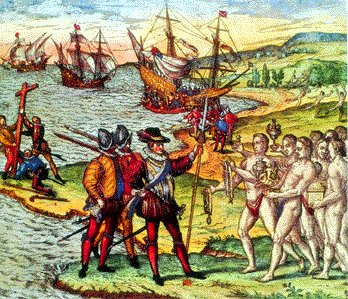
outhouses! The Europeans wouldn't have discovered the Americas, there would
have been no French Revolution, there would have been no American Civil War. If
people didn't have the urge to move forward, literally to different lands and
with ideas and technology, the world would be primitive. It's true that chasing
an impossible dream can consume a person's whole life with no reward, but
simply settling is not the solution. Russell criticizes this aspect of human
nature too heavily. The urge to improve is a part of human nature, and it's not
something we can get rid of, or something we should.
Sunday, March 3, 2013
Not
Racist but....Sexist?
In Brent Staple's piece "Black Men and Public
Space", he explains the hardships of being labeled as dangerous by
strangers simply because of his race. Staples comes to terms with the stereotypes
automatically attached to him and learns to live with them. The general
attitude of the piece is positive. Even though Staples is expressing his
frustration with the way people judge him because of his race, he doesn't have
a 'woe-is-me' attitude. The main focus point in this piece is Staples race, but
I picked up on an underlying theme: gender. In all examples and anecdotes
Staples uses, he is either intimidating a woman or he is not gender specific.
In his first paragraph, he writes about a woman who started running when she
saw him coming down the street. He also writes about going into a jewelry shop,
where the female proprietor brought out a guard dog to get him to leave. In
paragraph five, he writes "After dark...I often see women who fear the
worst from me", and then states that women are very vulnerable to
violence. However, he makes no mention of men. The he implies that men are
effected by his presence is when he writes about people, "black, white,
male, or female" (paragraph 2), who lock their car doors when he crosses
the street in front of them. All his examples make women look weak. Not only
that, but because he uses the examples to prove that people are judging him
incorrectly, he makes women look foolish for being scared of him. His point was
that he affects the atmosphere around him in negative ways, but I think he
should have represented both sexes more equally. We no longer live in a world
where women are defenseless. Many women can fend for themselves, some even
better than other men! Staple's portrayal of women is sexist and slightly
offensive.
Sunday, February 24, 2013
Is
the Unreality of Vegas Transferring to Reality?
In her piece "Marring Absurd", Joan Didion
ridicules marriages in Las Vegas. She explains that, in Las Vegas, "there
is no "time"...no night and no day and no past and no future",
and that "what happens there has no connection with "real"
life" (paragraph 2). This includes the marriages that happen there; a
wedding in Las Vegas has almost no meaning because all the traditional values
of marriage have been sacrificed for efficiency and instant gratification. This
is already common knowledge, so what does it prove? Well, I think everyone
would agree that in the real world, marriage still has value and that the
customs of a Vegas wedding are unique to Vegas. Basically, Vegas weddings and
real life weddings are in completely separate categories. However, this does
not mean that "real world" weddings are all perfect happy endings.
The divorce rate in the United States has been steadily increasing since the
beginning of the 20th century and spiked greatly in the 70s and kept going up
from there. By 1985 the divorce rate was up to 50%! (http://divorce.lovetoknow.com/Historical_Divorce_Rate_Statistics)
I can't help but wonder if the low values of Vegas weddings have influenced
American culture and society's attitude toward marriage. In my opinion, too
many people treat marriage like a game that they can play until they're bored,
then quit. Marriage is supposed to be a lifelong commitment, but more and more
people get divorced each year. I suppose nothing can be proven, but I think Las
Vegas weddings have lowered society's standards of marriage overall.
Sunday, February 17, 2013
Is
Manliness Unhealthy?
The whole point of Brad Manning's passage "Arm
Wrestling with My Father" was to prove that communication can be made
through a physical relationship as effectively as an emotional relationship.
Manning wrote about his relationship with his father, which was strictly
physical. It mainly revolved around sports and challenges of strength,
including the arm wrestling matches that made such an impact on Manning as a
child. Although this story may be true for Manning, it is the extreme
stereotype of the way men communicate. Men are known to not talk about their
emotions, and when they do it's considered feminine. I feel that this piece too
strongly supported this stereotype. Although it may be true that some men are
very unemotional, it's not the case for all men, especially not in today's
society. It is becoming more and more accepted that men can be sensitive
without being emasculated. In fact, being completely unemotional and
unexpressive except through physical means is considered emotionally unhealthy. The traditional definition of manliness is
becoming outdated. It’s no longer a
desirable characteristic for a man to be completely unexpressive, whereas in
history men who were sensitive were ridiculed.
I think Manning’s message is a little outdated and not necessarily a
good thing.
Sunday, February 10, 2013
Can
True Creation Happen in a Lab?
"Grade A: The Market for a Yale Woman's Eggs" by
Jessica Cohen questions the process of a very picky couple in finding an egg
donor for their child, but I took from it the controversy of whether people
should be able to choose characteristics for their children through egg donors
or egg selections in labs. In the essay, Cohen describes the specific
qualifications she had to meet to be considered by the couple, including
physical appearance, height, weight, race, religion, SAT score, grades in
school, and much more. The would-be parents wanted specific traits for their
"perfect child". However, there is no way to guarantee the preferred
traits in a child, no matter whose egg is used and what traits it contains.
Genetics is a tricky subject dealing with dominant and recessive genes and
having a gene pool containing two peoples DNA (the parents), and there's no way
to guarantee what traits will show in the child. No matter how hard a person
tries, they can't create a child without some unpredictability. Only nature can
choose what characteristics a child will have. Technology has come so far that
some people can view what genes their fertilized egg has to avoid genetic
diseases, but this has also opened a window to choose other things as well,
such as hair color, eye color, and other physical traits. I think this is
wrong. Tampering with creation in its most basic level like this is playing at
God. I don't care what religion you are or what you believe, but being able to
choose your child’s genetic makeup makes him or her something you assembled,
not created. I know that this is being done more and more frequently, but I
feel that choosing a child’s genetic makeup makes them not quite human. I know
this isn't true; genetically altered eggs become perfectly healthy and normal
babies, but it seems wrong. I can't imagine genetically altering my child’s egg
to have certain physical characteristics and looking at them when they grow up
and thinking: I chose that hair color. I've always known that, whether I liked
the way I looked or not, it is the way God made me. What If I instead I had to
say it's the way my parents chose to make me? It just doesn't sit right with
me.
Sunday, February 3, 2013
Judging
the Disabled: Choice or Instinct?
Subscribe to:
Posts (Atom)